I want to apologize for not answering questions left in my comments section. I'm new to this.
1) Starter guitar for 5-year-olds: You might do some research on travel or parlor guitars. They're smaller than standard acoustics. If I didn't know better, I'd think they were made for kids. The downside: they use steel strings, which causes this result to first-timers. If you want to avoid this mess, classical guitars have nylon strings, which are very easy on finger tips. Before buying, visit an independent guitar shop (stay away from chains unless you know what you're talking about or are accompanied by someone who does), pick up a few guitars, and play them. Don't worry about models or brands. This might help. As for the "old" comment, guitarists plays guitars.
2)Learning on acoustic or electric: I learned on a classical guitar. I have no empirical evidence, but electric guitars have skinny necks and cut-aways that allow your fingers to reach more of the fretboard, which might encourage more musical expression. I'm convinced talent is only 10% of playing an instrument. It's 90% enthusiasm. Then again, what do I know?
3)I never recorded a performance, so no luck there. I played parties, bars, and battle-of-the-bands contests.
4)I still cry when I hear the "Look for the Union Label" song. How 'bout you? I never named my guitar. I guess I'll call her Charlene.
Wednesday, June 16, 2010

Google Docs: What's the Deal?
Skepticism: you hear, “There is no such thing as a free lunch”; you read, “Buy 1 Get 1 Free”; and you learn, “You get what you pay for.” Americans raise their eyebrows in contempt whenever Free is offered--unless we’re at Costco, then it’s all easy-peezee.
I see Google Docs, but I can’t believe it. I still think it’s a scam, somehow. What’s their angle? How does Google expect to make money? How will the pre-MTV generations react to such generosity?
Google’s famous corporate motto, “Don‘t be evil,” appears to be a good place to start those three questions. I’ve been using PCs for a long time—since amber-lettering on a black background was considered a huge techno-leap from the previous milestone, green-lettering on a black background. I’m used to change. Sadly, change meant more power, and more power meant new paradigms. In other words, each change in hardware meant purchasing new software at great expense to me, the customer. Google might simply want to avoid the evil of forced purchases of expensive software, then the clouds gather. Are they trying to entice us with their suite, then offer a more elaborate platform and tools for a monthly or annual fee? See Zoho.com for a look at the future of Google Docs, maybe. Like guys on the corner say, “First time’s free.” Is that why they call us “users”?
Now we step into the ROI for Google Docs. We all know: licensing fees are ridiculously expensive. Productivity squanders because departmental budgets allow only one Adobe Acrobat license. Google Docs appears to overcome this obstacle but at what price? Other than ads, I can’t see how this captures money. Also, I’m certain many hand-wringing CIOs worry about security already but handing over corporate documents to one vendor would make anyone tread cautiously. This monolithic approach would initially save money; yet corporations, government offices, and organizations become beholden to one giant server at Google. O, I hear the wailing and gnashing of teeth in the distance.
Humans tend to be all too human. Trust can be cultivated when the pioneers return with tales. For example, Generation X mercilessly mocked parachute pants from the comfort of their acid-washed jeans. With 1 in 5 workplaces claiming to use Google Docs, it’s only a matter of time before everyone is riding the SaaS wave.
I see Google Docs, but I can’t believe it. I still think it’s a scam, somehow. What’s their angle? How does Google expect to make money? How will the pre-MTV generations react to such generosity?
Google’s famous corporate motto, “Don‘t be evil,” appears to be a good place to start those three questions. I’ve been using PCs for a long time—since amber-lettering on a black background was considered a huge techno-leap from the previous milestone, green-lettering on a black background. I’m used to change. Sadly, change meant more power, and more power meant new paradigms. In other words, each change in hardware meant purchasing new software at great expense to me, the customer. Google might simply want to avoid the evil of forced purchases of expensive software, then the clouds gather. Are they trying to entice us with their suite, then offer a more elaborate platform and tools for a monthly or annual fee? See Zoho.com for a look at the future of Google Docs, maybe. Like guys on the corner say, “First time’s free.” Is that why they call us “users”?
Now we step into the ROI for Google Docs. We all know: licensing fees are ridiculously expensive. Productivity squanders because departmental budgets allow only one Adobe Acrobat license. Google Docs appears to overcome this obstacle but at what price? Other than ads, I can’t see how this captures money. Also, I’m certain many hand-wringing CIOs worry about security already but handing over corporate documents to one vendor would make anyone tread cautiously. This monolithic approach would initially save money; yet corporations, government offices, and organizations become beholden to one giant server at Google. O, I hear the wailing and gnashing of teeth in the distance.
Humans tend to be all too human. Trust can be cultivated when the pioneers return with tales. For example, Generation X mercilessly mocked parachute pants from the comfort of their acid-washed jeans. With 1 in 5 workplaces claiming to use Google Docs, it’s only a matter of time before everyone is riding the SaaS wave.
Friday, June 4, 2010
My Favorite Brand: Fender Stratocaster
Here are the two reasons why I love the Fender Stratocaster brand: 1) it’s the guitar my heroes play(ed) 2) they’re affordable for working-class stock boys like the one I was at 15.
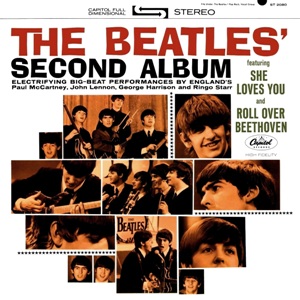
The start: I saw the album cover for the Beatles second US album. Cool, so cool. They played Rickenbacker and Gretsch models. I couldn’t find (or afford) those guitars. I went to a library and found books on the Beatles and also read about the musicians who influenced them or worked with them. Buddy Holly, a major influence on the Beatles, played one of the first Strats. Dick Dale, the King of Surf Guitar, played one. Jimi Hendrix played one yet sounded like he was playing two. Eric Clapton played one. So did Stevie Ray Vaughn. These were the guitarists who eventually inspired me to play like them then find my own playing style.
I bought a $25 Strat-copy from a friend. You get what you pay for; we lost touch shortly afterward. I learned to play with this craptastic instrument for a few years. It actually helped: I had to press very hard on the strings because the action was too high, so my hands became very strong and my callouses became very hard to compensate; I created idiosyncratic chords because the strings never stayed in tune.
The guitar: I got my first job and began saving. Within six months, I had enough to buy a new standard Stratocaster from Guitar Center. At this time, only one other guitar had visibility: The Les Paul. Gibson built this solid-body guitar for elite muscians, who have elite savings accounts. I played one and the neck didn’t feel right, the body was uncomfortably boxy, and it cost $2,000. I could buy a $25 sustain pedal to get what every Les Paul owner used as their selling point.
Stratocaster fed my leftist, unionist perspective—a guitar for the masses—that also was the guitar for rock and blues.
The start: I saw the album cover for the Beatles second US album. Cool, so cool. They played Rickenbacker and Gretsch models. I couldn’t find (or afford) those guitars. I went to a library and found books on the Beatles and also read about the musicians who influenced them or worked with them. Buddy Holly, a major influence on the Beatles, played one of the first Strats. Dick Dale, the King of Surf Guitar, played one. Jimi Hendrix played one yet sounded like he was playing two. Eric Clapton played one. So did Stevie Ray Vaughn. These were the guitarists who eventually inspired me to play like them then find my own playing style.
I bought a $25 Strat-copy from a friend. You get what you pay for; we lost touch shortly afterward. I learned to play with this craptastic instrument for a few years. It actually helped: I had to press very hard on the strings because the action was too high, so my hands became very strong and my callouses became very hard to compensate; I created idiosyncratic chords because the strings never stayed in tune.
The guitar: I got my first job and began saving. Within six months, I had enough to buy a new standard Stratocaster from Guitar Center. At this time, only one other guitar had visibility: The Les Paul. Gibson built this solid-body guitar for elite muscians, who have elite savings accounts. I played one and the neck didn’t feel right, the body was uncomfortably boxy, and it cost $2,000. I could buy a $25 sustain pedal to get what every Les Paul owner used as their selling point.
Stratocaster fed my leftist, unionist perspective—a guitar for the masses—that also was the guitar for rock and blues.
Subscribe to:
Comments (Atom)